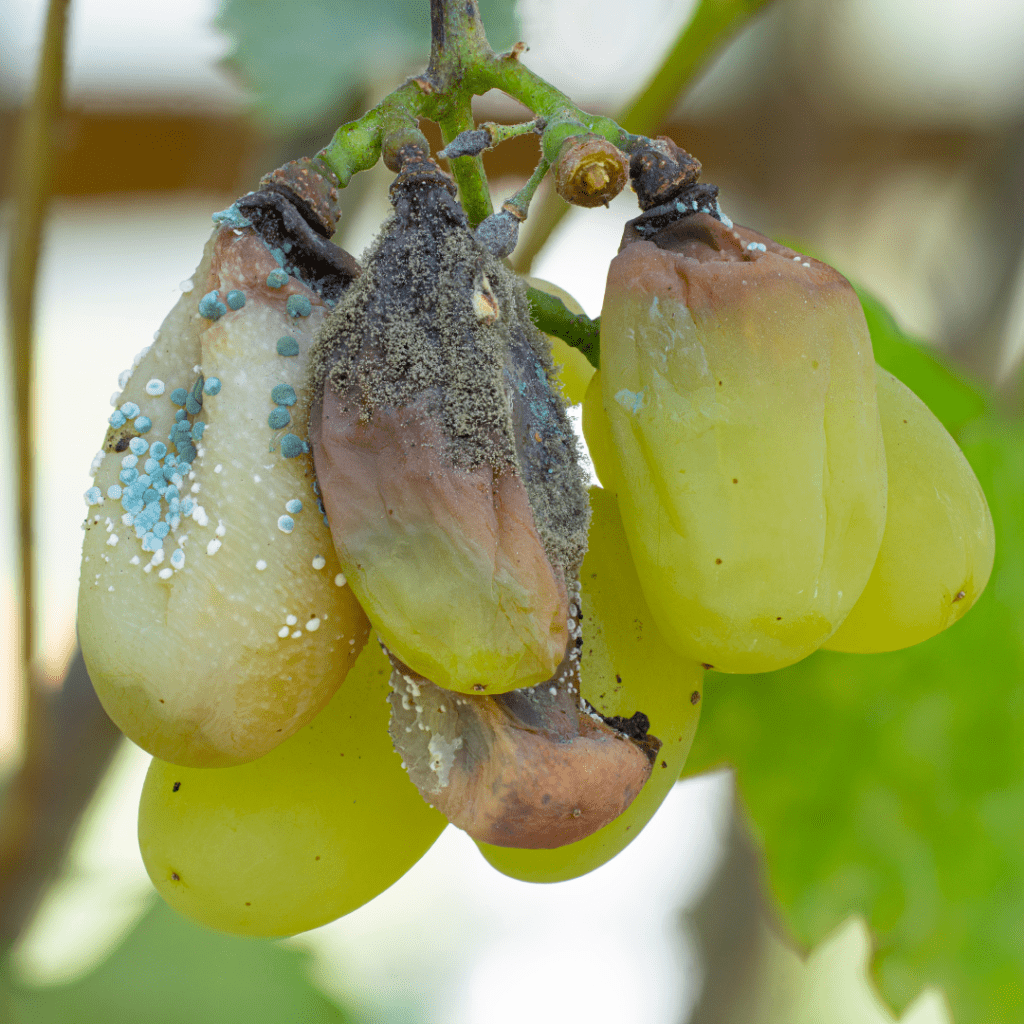
Grapes affected by Botrytis cinerea or general fruit rot introduce significant biochemical challenges that can ruin wine quality. This protocol outlines the specific threats posed by fungal growth and enzyme activity during the winemaking process.
Grapes affected by Botrytis cinerea (noble rot or grey rot) or general fruit rot often harbor unwanted fungal growth.
The primary challenge is oxidative damage driven by laccase and unstable phenolics, which rapidly leads to browning, aroma loss and protein instability.
KEY PRODUCTS
Addressing rot requires a combination of specialized products to remove harmful debris and protect the juice’s structural integrity. These interventions focus on both physical cleanup and chemical buffering to prevent oxidation.
2B FermControl ViniTannin Supreme for antioxidant protection and structural reinforcement due to laccase production which oxidizes polyphenols.
PROTOCOL OBJECTIVES
This protocol aims to stabilize the must and preserve the delicate sensory characteristics of white wine. By neutralizing laccase and detoxifying the juice, the process ensures a cleaner fermentation environment.
To reduce impact by laccase enzyme by limiting oxidation through non-sacrificial oxidative buffering.
To adsorb oxidized phenolics and browning substrates, thereby reducing laccase substrate availability.
Reduce microbial load and clean up must from rot-affected grapes.
Preserve aromas by removing oxidised phenolic debris.
Detoxifying must while enhancing oxidative resistance and rebuilding phenolic structure.