In the pursuit of low-intervention and natural winemaking, controlling the vessel-to-wine dynamic is a critical parameter. While wood alternatives inevitably impart exogenous oak lactones, furfurals, and wood tannins into the matrix, porous clay amphorae represent a completely different chemical path. For cellars targeting ultimate varietal purity, clay offers a neutral, breathable vessel that guides a wine’s physical evolution without masking its terroir.
For South African winemakers balancing high-sugar accumulations, late-season pH variances, or delicate phenolic extractions, managing oxygen without adding flavour compounds is highly demanding. Selecting an expertly engineered clay vessel requires a strict evaluation of clay composition, mineralogy, firing thermodynamics, and convective fluid dynamics.
Key Takeaways: Premium Amphora Selection for Winemakers
- Zero Exogenous Additions: Tinajas Moreno León amphorae are naturally flavour-neutral, preventing wood-derived compounds from masking the site-specific typicity of delicate white and red cultivars.
- Thermodynamic Consistency: Crafted by the Tinajeros family since 1783, modern biomass firing protocols ensure highly consistent clay porosity, enabling micro-oxygenation without the risk of aggressive spike oxidation.
- Convective Leisuring: The specialised geometric shapes—including the Tinaja and Huevo (Egg)—foster natural, passive convection currents that keep lees suspended to naturally build mid-palate volume.
- South African Distribution: The complete technical portfolio of Tinajas Moreno León vessels is imported and consultatively integrated via FermTech.co.za.
1. How to Choose Which Clay Vessel to Use for Winemaking: The Amphora Matrix
Choosing which type of vessel to use for winemaking dictates how a wine will interact with dissolved oxygen, manage its native grape-derived tannin structures, and develop its final textural profile. While unlined concrete can sometimes risk raising a wine’s pH due to calcium leaching, and wood alters aromatics via oak lactones, raw clay amphorae balance structural stability with total flavour neutrality.
| Vessel Structural Variable | Standard Wooden Cooperage | Tinajas Moreno León Clay Amphorae |
| Flavor Extraction Index | High (imparts wood tannins, vanillin, guaiacol) | Absolute Zero (100% flavour neutral) |
| Micro-Oxygenation Vector | Porous wood staves ($1.0 – 2.5 \text{ mg/L/month}$) | Micro-capillary clay pores; slow and continuous |
| Internal Fluid Dynamics | Static; limited natural particle movement | Continuous, gentle convective currents |
| Linings & Customization | None (raw wood contact) | Raw, or treated with natural beeswax / rosin |
Clay Porosity and Micro-Oxygenation Dynamics
The structural matrix of Tinajas Moreno León vessels is defined by the unique, orange-tinted clay found in Torrejoncillo, Spain. The mineralogy of this specific clay deposit, combined with hand-coiled craftsmanship, regulates gas exchange at a microscopic level:
- The Mechanism: The firing process in modern, temperature-controlled biomass kilns ensures that the clay’s micro-capillaries are uniformly set. This allows for a gentle, passive micro-oxygenation process. The porous clay breathes continuously, facilitating a highly stable rate of gas exchange, a process deeply explored in ceramic material gas transfer studies.
- The Winemaking Outcome: This slow, persistent exposure to trace levels of oxygen allows winemakers to naturally polymerise green tannins and stabilize anthocyanins (colour compounds) without the extraction of wood-derived ellagitannins. This makes it an invaluable technical choice for safeguarding the vibrant fruit purity and delicate ester profiles of low-sulphur red and white wines.
Natural Protection and Coating Customization
Because minimal intervention wines are highly susceptible to microbial volatility and sudden oxidation due to low sulphur dioxide SO2 environments, controlling the exact extraction surface is critical.
Tinajas Moreno León vessels can be deployed in their raw clay state to maximise breathability, or custom-treated internally with natural materials like food-grade rosin or raw beeswax. This protective lining decreases the net porosity for extended aging programs, acting as an anti-oxidative barrier that safeguards volatile aromatics and prevents fluid seepage, as observed in ancient model clay aging setups.
2. How Does Vessel Shape Alter Convective Fluid Dynamics and Lees Integration?
The physical geometry of an amphora alters the physical movement of the liquid during fermentation and maturation. The traditional classification of clay vessels must evaluate how the internal shape drives kinetic energy.
The Physics of Natural Convection Currents
Standard cylindrical tanks and traditional barrel configurations create dead zones where lees quickly precipitate and compact at the bottom of the vessel. This requires aggressive manual intervention (such as battonage/lees stirring) which introduces oxygen spikes and risks mechanical damage to delicate wine structures.
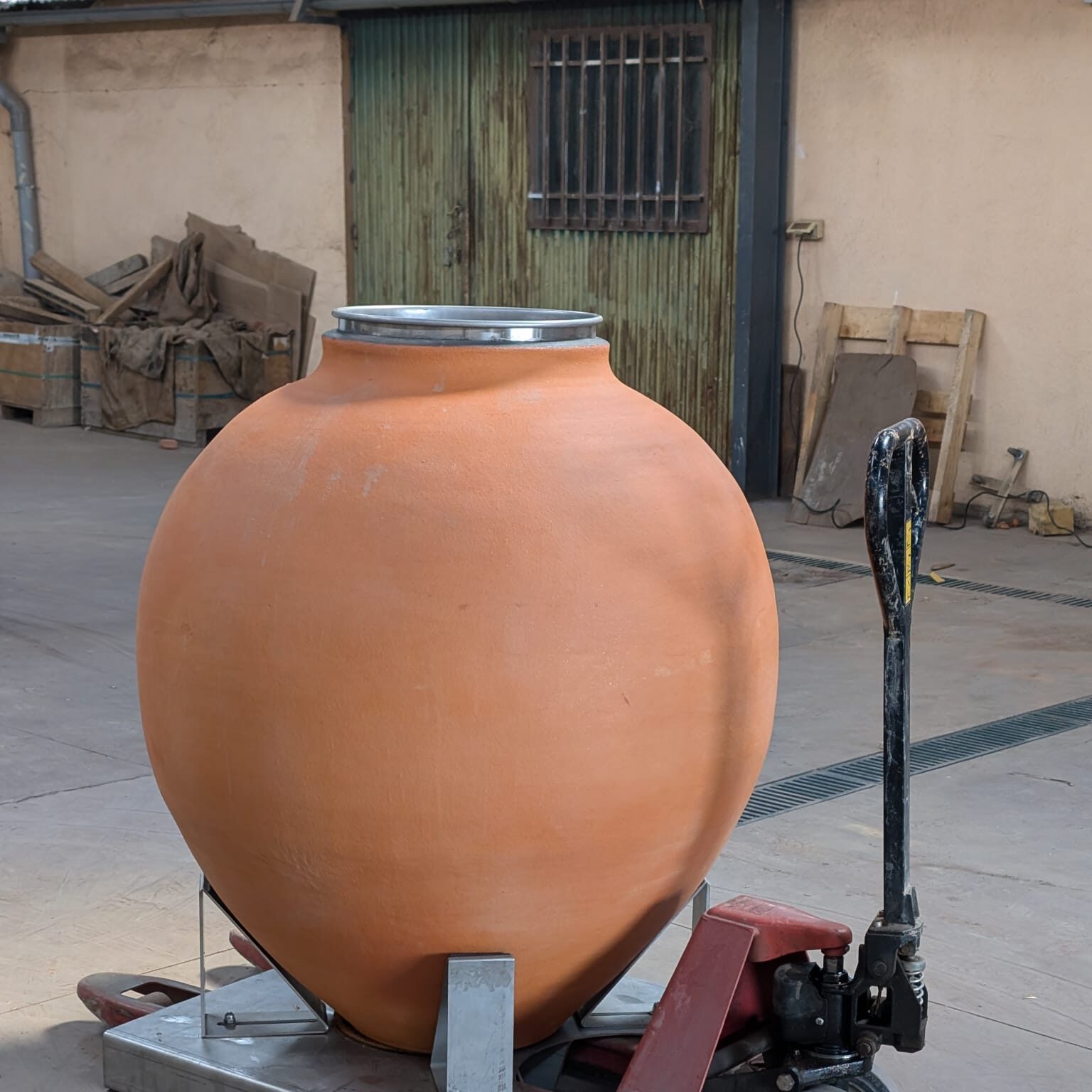
In contrast, Tinajas Moreno León shapes, such as the elongated Tinaja and the ovular Huevo (Egg), leverage fluid thermodynamics:
Ambient Thermal Variations → Liquid Expands/Contracts → Continuous Fluid Motion → Passive Lees Suspension
As ambient cellar temperatures fluctuate slightly, temperature gradients develop between the outer clay wall and the core of the liquid. The unique curved architecture of the clay walls guides the expanding liquid upward along the centre, which then cools and cycles down the perimeter.
This continuous, passive loop keeps fine lees in a constant state of gentle suspension. The continuous interaction between the wine and the yeast autolysate naturally builds mid-palate weight, releases mannoproteins, and texturally softens the wine’s acid framework without requiring physical intervention.
3. Tinajas Moreno León: Centuries of Spanish Heritage Applied to Modern Oenology
As South African winemakers transition toward highly authentic, site-specific expressions (highly visible in the premium Western Cape Old Vine initiatives, skin-contact Chenin Blancs, Grenache, and Cinsault), incorporating heritage vessels has become an essential stylistic choice.
Tinajas Moreno León vessels are optimised as high-precision oenological instruments:
- Unbroken Generational Expertise: Handcrafted by the tenth generation of the Tinajeros family since 1783, these vessels merge centuries of artisanal clay handling with modern, precise firing protocols.
- Biomass Kiln Firing: Utilising advanced biomass-fueled kilns guarantees completely uniform thermal distribution during the baking process. This eliminates structural hot spots or weak points, producing extraordinarily durable amphorae capable of withstanding varied cellar conditions.
- Tailored Formats for Volume Control: To accommodate everything from experimental small-batch programs to commercial production blocks, these amphorae are crafted in highly versatile shapes. From traditional amphorae to structural eggs, winemakers can specify the exact dimensions required to manage skin-to-juice contact surface areas.
4. Comprehensive Technical Support in South Africa via FermTech
Integrating a technical amphora program into a premium cellar layout requires hyper-localised logistics, reliable import compliance, and expert consultation. In South Africa, FermTech (FermTech.co.za) serves as the exclusive distribution and technical integration partner for Tinajas Moreno León.
The technical team at FermTech understands the complex chemistry of South African fruit, especially the challenges of preserving fresh, linear acidity in coastal regions or optimising skin-fermented white programs without synthetic additions. FermTech provides complete cellar integration support, helping you evaluate everything from the correct format sizes to specialised amphora drain taps and strainers to streamline your workflow.
Whether your production objective is refining the structural tension of a skin-contact white or softening the rustic tannins of an un-sulphured red blend, FermTech delivers the historic Spanish clay vessels and modern winemaking protocols your cellar demands.
To explore the complete vessel dimensions, book a custom structural consultation for your cellar or view the dedicated clay vessel portfolio at FermTech.co.za.