Key Takeaways
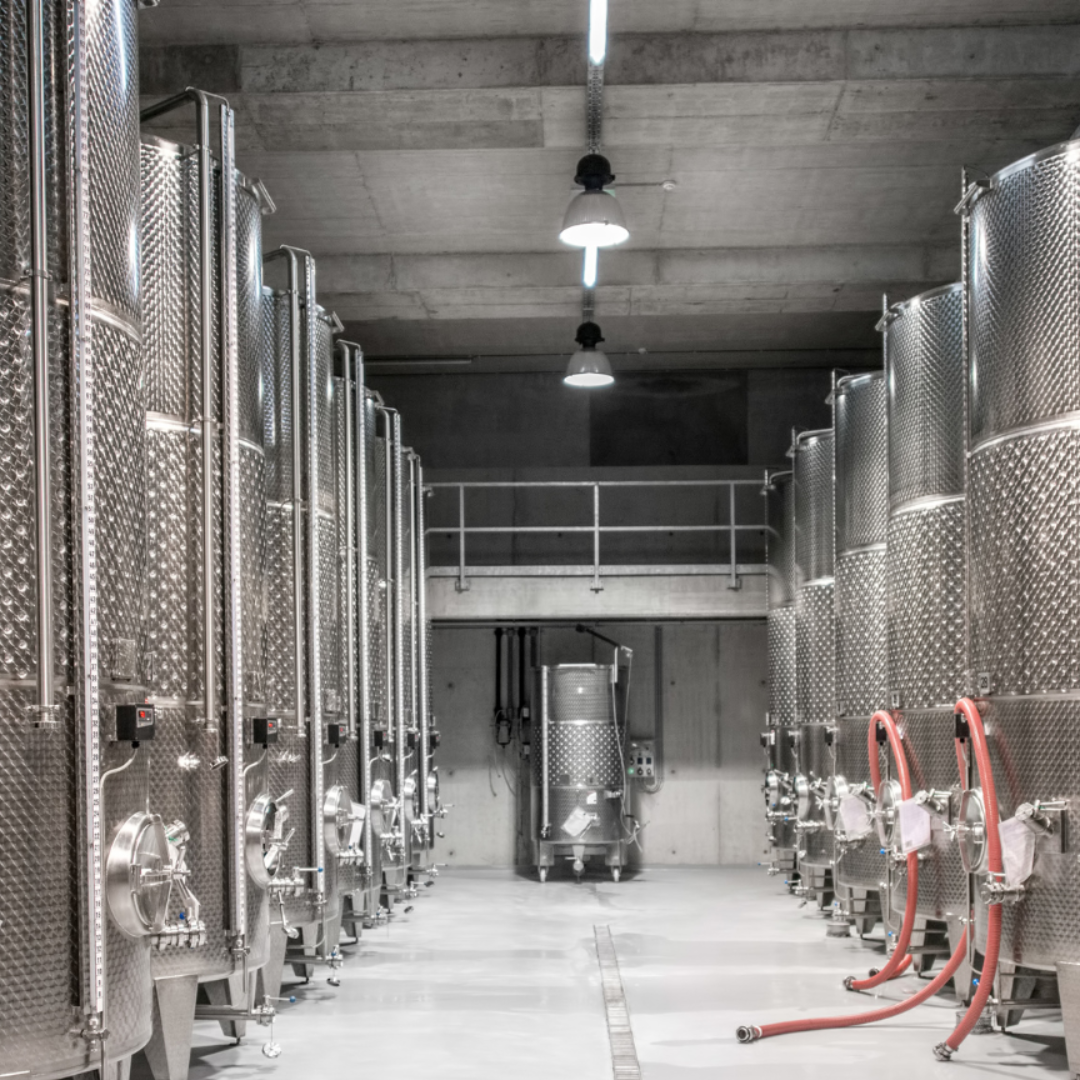
- 3D Inner Surface Topography: Speidel’s proprietary interior polish prevents organic soils and tartrates from adhering to the tank walls, significantly lowering biofilm risks and cleaning chemical overheads.
- Precision Thermal Dynamics: Laser-welded cooling jackets handle high-pressure glycol cycles efficiently, allowing tight temperature control to prevent yeast stress and reductive off-flavours.
- Total Headspace Elimination: Variable-capacity floating lids use food-grade pneumatic seals to physically eliminate air gaps, preventing oxidative degradation across shifting volume lots.
- Local Integration Engineering: FermTech serves as the direct technical partner in South Africa, providing customised port configurations and seamless integration into automated cellar lines.
Why Does Internal Steel Topography Influence Volatile Acidity and Biofilm Colonisation?
Controlling microbial hygiene is a fundamental challenge during active vinification and long-term maturation. Microscopic imperfections on the internal walls of stainless steel vessels often become nesting grounds for spoilage yeasts and bacteria. Microorganisms like Brettanomyces bruxellensis and Acetobacter aceti find refuge in surface micro-crevices, shielding themselves from standard CIP (clean-in-place) chemical regimes and forming resilient biofilms. This colonisation risk directly correlates with a tank’s surface roughness profile.
Traditional brushed steels often leave unidirectional microscopic grooves that trap organic particulates and yeast cells. Speidel addresses this challenge at the factory level by utilising high-grade AISI 304 and AISI 316 stainless steel sheets treated with a proprietary 3D inner surface polish.
For production winemakers, this advanced microtopography delivers measurable practical benefits:
- Suppressed Volatile Acidity (VA) Risks: Eliminating microbial pockets lowers the risk of spontaneous Acetobacter blooms, safeguarding aromatic integrity.
- Streamlined CIP Efficiency: Tartrate deposits and yeast lees release rapidly during rinse cycles, cutting water usage, caustic consumption, and physical scrubbing time.
- Zero Sensory Carryover: The pristine steel matrix ensures absolute flavour neutrality, making it simple to cycle a tank from an aromatic white wine to a robust red program without flavour cross-contamination.
How Do Speidel Vessels Prevent Reductive Stress and Protect Volatile Esters?
While porous vessels allow passive micro-oxygenation, stainless steel serves as a complete barrier against oxygen ingress. This absolute isolation makes steel the industry standard for retaining primary varietal fruit expression—such as volatile thiols in Sauvignon Blanc or delicate esters in Chenin Blanc. However, this hermetic seal can occasionally induce reductive stress if the fermentation kinetics and thermal variables are not managed with precision.
[Hermetic Oxygen Seal] ──> [Rapid Biomass Inoculation]
         ▲                                   │
         │                                   ▼
[Suppressed H2S Synthesis] <─── [Laser-Welded Glycol Control]
Unmanaged temperature spikes speed up yeast metabolism too much, depleting available nitrogen and forcing yeast cells to synthesise volatile sulphur compounds like hydrogen sulphide (H2S). Speidel counters this risk through advanced, laser-welded cooling jackets.
By applying automated, high-pressure glycol circulation directly against the tank walls, Speidel jackets provide rapid thermal transfer. Keeping the core temperature within a tight range (e.g., 13°C to 15°C for crisp whites) stabilizes yeast kinetic activity. This temperature regulation prevents the cellular stress that leads to off-flavors, while protecting volatile, temperature-sensitive primary aromas.
Technical Analysis: Variable Capacity vs. Fixed Geometry Tanks
Industrial cellars must balance large-volume efficiency with small-batch flexibility. Speidel’s engineering portfolio covers two distinct functional paradigms: fixed-volume fermentation vessels and floating-lid variable capacity (BO) configurations.
The following data-comparison table outlines how these structural variations perform across key cellar metrics:
| Engineering Parameter | Speidel Fixed-Volume Tank (FD/FS Series) | Speidel Variable Capacity Tank (BO/FO Series) |
| Primary Structural Profile | Fixed dome top, reinforced conical or dished bottom. | Open-top cylinder with a pneumatic floating lid assembly. |
| Headspace Management Mode | Inert gas blanketing required (Argon/CO2 injection). | Mechanical volume adjustment; lid drops directly onto liquid level. |
| Seal Mechanism Integrity | Welded steel boundary; absolute atmospheric isolation. | Inflatable food-grade pneumatic bladder with pressure gauge check. |
| Best Analytical Application | High-volume primary fermentations; long-term bulk maturation. | Multi-block vineyard trials; variable-volume restaurant kegging programs. |
| Sediment Discharge Efficiency | High (optimised by steep bottom cones for total racking). | Moderate (dependent on flat or shallow dished base structures). |
How Does Floating-Lid Engineering Eliminate Oxygen Pickup in Variable Storage?
The floating-lid design of Speidel’s variable capacity range solves a common logistical problem: managing shifting volumes during racking, blending, or partial lot bottling. Storing wine in a partially filled, fixed-volume tank creates a large headspace. Even with gas sparging, this headspace can cause oxygen pickup, leading to the oxidation of polyphenols, loss of free sulphur dioxide (SO2), and flat aromatics.
Speidel’s floating lid system uses an inflatable, high-elasticity pneumatic seal that sits directly on top of the wine’s surface. This adjustable design ensures that whether the tank is at 100% or 35% capacity, the headspace is physically eliminated.
To maximise system security, the sealing system includes a high-pressure hand pump and an integrated breathing valve. The valve vents excess carbon dioxide gas during residual outgassing while blocking outside air from entering. This system provides a reliable barrier against oxidative spoilage, allowing winemakers to hold split lots safely without compromising quality.
Integrating Speidel Engineering into Your South African Cellar Flow
Integrating new fermentation capacity into an existing cellar footprint requires assessing floor loads, connection manifolds, and cleaning infrastructure. As the exclusive technical integration partner for Speidel in South Africa, FermTech manages this technical setup from initial site dimensions to final layout configuration.
Every Speidel vessel sourced via FermTech features precision-machined weld seams and high-clearance legs. These details ensure that the tanks line up seamlessly with local racking arms, pomace discharge pumps, and automated CIP loops. You can review the full breakdown of dimensions and capacities directly through the FermTech Vessels Portfolio.