

Key Takeaways
- The Shift in Winemaking Strategy: The modern cellar focus has evolved from heavy-handed extraction to a model favouring textural purity, site clarity, and long-term phenolic stability.
- Amphorae as Precision Tools: Spanish clay (Tinajas Moreno Leon) offers a dual benefit: contributing structural richness and body while simultaneously sharpening aromatic focus—a claim validated by five years of continuous production at Stony Brook.
- Orion for Phenolic Architecture: Tonnellerie Orion barrels remain the primary instrument for controlled micro-oxygenation and tannin polymerisation, essential for site-specific red and white elevations.
- Strategic Vessel Allocation: Balancing clay and oak requires a deliberate matrix approach, where the vessel is chosen to support the fruit profile, not mask it.
- Technical Project Delivery: Modern cellar integration in South Africa requires a deliberate matrix approach, aligning mechanical vessel profiles with a block’s underlying phenolic weight.
Why Is the Modern Cellar Shifting Toward Site Clarity?
During the FermTech Business of Wine Panel held on 17 June 2026, a clear consensus emerged among the attending producers: the era of aggressive extraction is closing. The new benchmark for elite South African winemaking is textural purity.
For the production manager, this creates a critical decision matrix: which vessels preserve the nuances of the terroir while providing the necessary structural maturation environment? Whether you are managing the structural demands of a flagship Cabernet or the reductive sensitivity of a site-specific Chenin, the choice of vessel—Clay versus Oak—is the primary lever for controlling fruit identity.
Our reference network, including estates like Tokara, Mont Rochelle, Bouchard Finlayson, Reyneke, Stony Brook and Lynx, has demonstrated that successful vessel integration is not about favouring one material over another, but about aligning vessel mechanics with the wine’s intended phenolic trajectory.
Amphorae: Does Clay Enhance Structural Tension?
One of the most persistent questions in modern cellar design is how clay impacts the macromolecular structure of wine. Does it provide richness without the sensory overlay associated with oak?
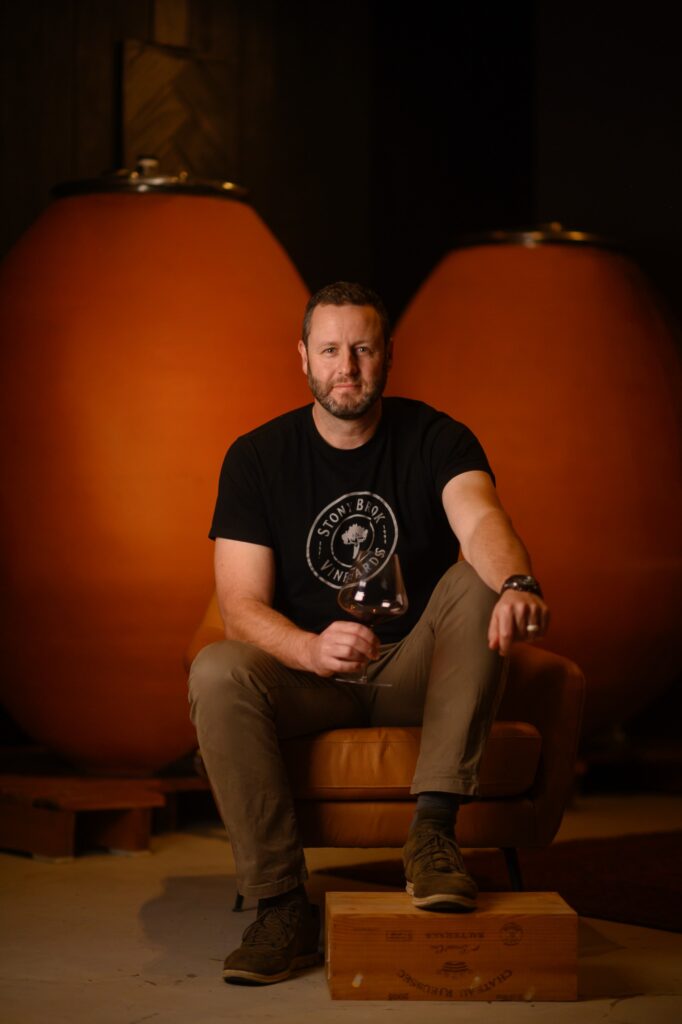
Craig McNaught of Stony Brook, having utilised Tinajas Moreno Leon amphorae for five consecutive vintages, provides an honest appraisal:
“Having worked with the amphorae from Moreno Leon for the last 5 years, I’ve found that they have added an incredible dimension to our wines. The vessels bring richness and body, but at the same time they somehow seem to enhance the purity and focus of the wines.”
– Chris McNaught, Stony Brook Vineyards
This dual effect—increasing body while tightening focus—is the hallmark of high-quality, inert clay. Unlike barrels, which introduce exogenous oak tannins, clay relies on the vessel’s passive micro-oxygenation and geometric thermodynamics to round out tannins and release mannoproteins, preserving the thiol and ester profiles of the original site.
Comparative Maturation Matrix: Clay vs. Oak
When designing your upcoming cellar program, it is essential to map the intended phenolic outcome against the vessel’s physical impact. The following table contrasts the mechanical roles of Tinajas Moreno Leon amphorae and Tonnellerie Orion barrels.
| Oenological Variable | Tinajas Moreno Leon (Clay) | Tonnellerie Orion (French Oak) |
| Primary Interaction | Passive micro-oxygenation; inert surface. | Controlled oxygen transmission; active tannin extraction. |
| Structural Impact | Enhances mid-palate volume; boosts tension. | Polymerises tannins; builds aromatic complexity. |
| Aromatic Contribution | Zero modification; absolute purity. | Additive (lactones, ellagitannins, toast profile). |
| Ideal Application | Preserving delicate varietal esters/thiols. | Managing structural maturity; building longevity. |
| Maintenance | Minimal chemical intervention needed. | Requires consistent toast-level management. |
Integrating Your Cellar Program: Next Steps
Whether you are looking to trial clay to sharpen the focus of your white varietals or seeking the structural precision of Tonnellerie Orion to elevate your red maturation, FermTech provides the technical integration required to make these transitions seamless.
We encourage you to review our current allocations and technical specifications to plan your next vintage.
Technical Resources for Production Managers
- Download the Tonnellerie Orion Barrel Price List
- Download the Tinajas Moreno Leon Amphora Price List
Schedule a Technical Consultation
Schedule a Technical Consultation
Integration requires more than just procurement; it requires a cellar-floor plan that aligns with your specific fermentation kinetics and logistics. To discuss how you can optimise your upcoming vessel allocation and streamline your cellar integration in South Africa, please email clayton@fermtech.co.za to arrange a formal cellar consultation.
We look forward to helping you refine your maturation strategy.


