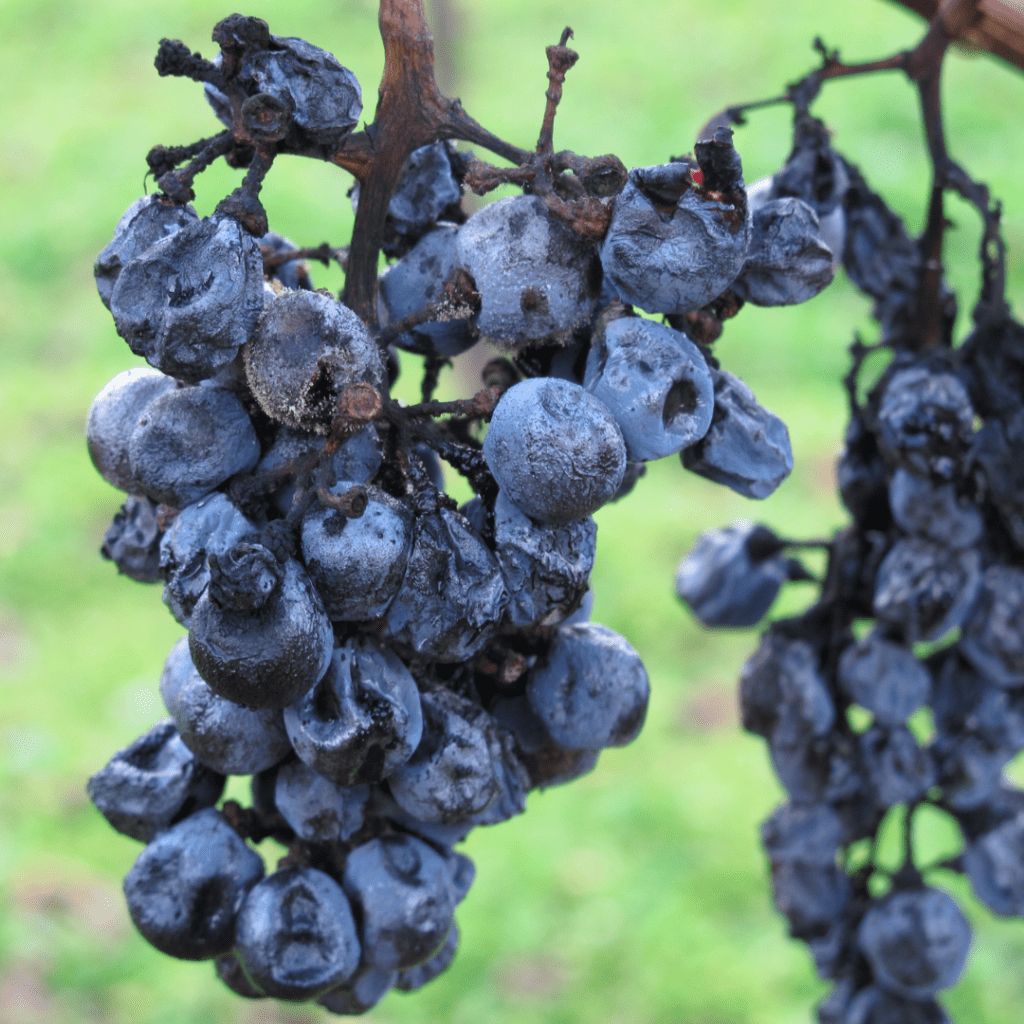
Grapes affected by Botrytis cinerea or general fruit rot present a serious risk, often harboring unwanted fungal growth that can ruin a vintage. Beyond standard spoilage, these fungi can produce stable mycotoxins like Ochratoxin A and trigger oxidative damage via laccase enzymes.
Grapes affected by Botrytis cinerea (noble rot or grey rot) or general fruit rot often harbor unwanted fungal growth.
These fungi can produce mycotoxins—toxic compounds that remain stable through winemaking and pose risks to wine quality and safety.
The most concerning in wine is Ochratoxin A.
Mostly, the primary challenge is oxidative damage driven by laccase enzymes.
KEY PRODUCTS
To protect the integrity of the red wine, specific agents are used to bind toxins and reinforce the phenolic structure. This dual approach ensures that the must is both detoxified and shielded from the degradative effects of laccase.
2B FermControl ViniTannin Supreme for antioxidant protection and structural reinforcement due to laccase production which oxidizes polyphenols.
PROTOCOL OBJECTIVES
The main goal is to limit the oxidative impact of laccase while ensuring a clean fermentation environment that preserves aromatic quality. By rebuilding the phenolic structure early, the protocol safeguards the longevity and color of the final wine.
To reduce impact by laccase enzyme by limiting oxidation through non-sacrificial oxidative buffering.
To adsorb oxidized phenolics and browning substrates, thereby reducing laccase substrate availability.
Reduce microbial load and clean up must from rot-affected grapes.
Minimize fermentation stress and off-character development.
Detoxifying must while enhancing oxidative resistance and rebuilding phenolic structure.